Elena
Elena KnowsElena’s journey to learn how her daughter Rita died is also a struggle to act through a body increasingly constrained by Parkinson’s disease. Convinced that Rita was murdered, she sets out for Buenos Aires to enlist Isabel, a woman bound to Rita by an old debt. The journey brings Elena to a truth she did not anticipate: Isabel says she killed Rita. Yet the encounter does not resolve Elena’s grief or settle what it means to have been a mother; it ends instead with Elena choosing, for the moment, simply to remain present and live.
Identity and the experience of illness
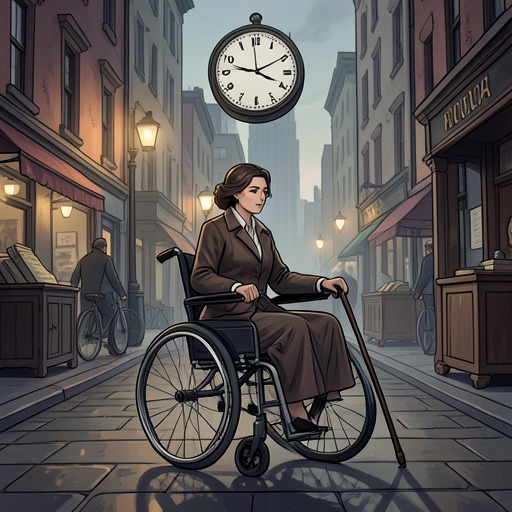
Elena’s illness shapes practical decisions as well as her sense of herself. At home, she knows how to take a step—lift her right foot, move it forward, lower it—but knowledge and intention do not make her body comply. She waits in her kitchen for levodopa to take effect, because the medication may give her a limited period in which movement becomes possible. The ten o’clock train is therefore not a convenience: she took her pill at nine, and a later train might come after the medicine’s effect has faded. The station is only five blocks away, but until her body responds, that distance remains beyond her reach.
Waiting has its own routines. Elena recites the street names between her home and the station, forward and backward, while the pill dissolves. She also repeats words associated with her illness and body, including levodopa, dopamine, and the names she gives to its forces: Herself, the messenger, and the dethroned king. The repetitions occupy time and help her endure the interval between wanting to move and being able to move. When anxiety rises, she believes the medication takes longer to work, so the need to remain calm becomes another demand placed on a body she cannot fully control.
Her impaired mobility also changes what investigation can mean. Elena understands that finding clues will require travel, questions, and the ability to look directly at people—tasks her own body may not reliably perform. She does not treat illness as proof that she has stopped caring or thinking; rather, she experiences a widening gap between what she knows and what she can physically do. Her plan depends on borrowing another person’s capacity for movement, not because her purpose has diminished, but because her ability to carry it out has.
Journey and purpose
On the day she sets out, Elena is nervous because she intends to make one last appeal for help in discovering who killed Rita. She expects that Isabel may remember Rita but may not recognize Elena, whom she has not seen for almost twenty years. The annual Christmas cards Isabel sends to Rita have kept the connection visible, though Elena worries that Isabel may not yet know Rita is dead. A school where Rita worked published a notice of her death two days after the burial; Elena does not know whether Isabel saw it.
Elena remembers the destination only in fragments: an old house in Belgrano, with a heavy wooden door and bronze fittings, beside doctors’ offices and near the train tracks. She cannot recall the street name, but remembers that the house is one or two blocks from a major avenue and a small plaza. To recover the route, she has sought help from a private car service. These incomplete directions reflect the demands of the trip: memory provides landmarks, while the journey still requires time, medication, and movement.
The timing also exposes Elena to the social aftermath of Rita’s death. The day she travels is the day pensions are paid, and she expects to pass neighbors waiting outside a bank. She fears being asked about her health or offered belated condolences by people who missed the vigil or burial. The funeral has made Rita’s death a matter of community attention, but that attention does not give Elena the answers she needs. She must continue toward Isabel despite the possibility of encountering sympathy that cannot help her establish what happened.
Motherhood, grief, and the case
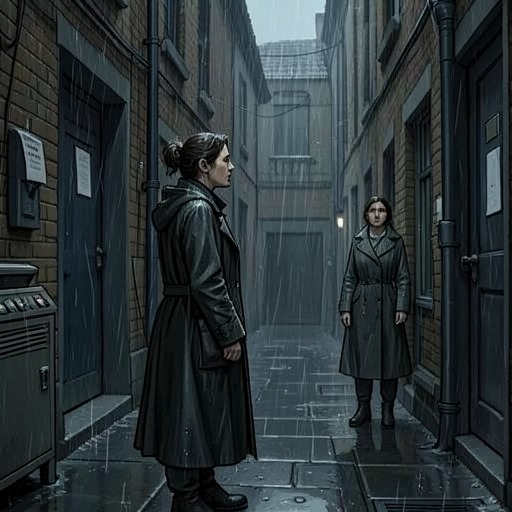
Elena’s certainty that Rita was murdered rests partly on a particular circumstance: it was raining, and Elena believes Rita never went near the church on rainy days. The official conclusion is suicide, accepted by the coroner, Inspector Avellaneda, and Roberto Almada. Elena cannot prove her own account, but the rain contradicts the explanation others have settled on. For her, the disagreement is not an abstract dispute about evidence. It is bound to her conviction that a mother knows her child.
That conviction is also a source of painful questioning. Elena loved Rita, though she says they fought, kept their distance, and did not express affection through frequent hugs or kisses. She wonders whether motherhood continues to name her after her daughter’s death, and whether losing Rita has taken not only her child but also the identity that came from being her mother. Her illness has not, in her view, erased her motherhood, even when it prevents her from dressing or moving freely. Rita’s death raises a different question: what remains of that identity when the child is gone?
Elena has already tried to advance the case. She gave Inspector Avellaneda a list of possible suspects, but each person on it had an alibi for the day Rita died. The failure to identify another suspect does not persuade Elena to stop; instead, it makes the possible field of inquiry seem larger. If the killer is someone she does not know, she reasons, then she must seek new people, motives, dates, and facts. But she also recognizes that she cannot conduct such inquiries alone. Her trip is an effort to turn her certainty and grief into action by securing Isabel’s help.
Isabel and the old debt
When Elena reaches Isabel’s home, she explains that she has come to call in a debt from twenty years earlier. Rita, without knowing Isabel, had helped her then, and Elena hopes that Isabel may repay that act by lending her what her own illness has taken from her: a body capable of investigating. Elena connects the old intervention to Isabel’s later family life, which she has glimpsed in the New Year photographs sent with the Christmas cards. To Elena, Isabel’s family represents a future Rita helped make possible, while Elena herself has been left without her daughter.
Isabel initially listens without interrupting. Elena’s speech becomes difficult as fatigue and illness interfere, and Isabel lets her pause rather than pressing her to continue. Then Isabel says that she cannot help because she killed Rita. The disclosure overturns Elena’s expectation that Isabel will become her partner in an investigation: the person she came to recruit identifies herself as the person responsible. Elena is visibly shaken, but the available account does not make this confession a complete explanation of Rita’s death or show Elena establishing its circumstances. The revelation changes the direction of their meeting without making the loss intelligible or reversible.
Afterward, Elena takes her pill and waits for it to dissolve. Isabel gives her time and adapts a short straw from the remaining material on a tray, then brings Elena tea and kneels beside her so they can meet face to face. These small acts of accommodation contrast with Elena’s earlier plan to enlist Isabel primarily as a body that could act for her. In the room, their exchange becomes less a matter of using Isabel’s mobility than of attending to Elena as she is.
Change and ending
When the medicine frees her mouth and throat, Elena tells Isabel that she loved Rita and that Rita loved her, though each loved in her own way. She asks whether she was a good mother, a question the scene does not resolve. Their conversation makes room for the possibility that love and fear existed together: Isabel suggests that Rita may have found Elena frightening, and Elena considers whether Rita feared inheriting her illness. Neither possibility erases Elena’s love, but they unsettle her assumption that being a mother meant knowing everything about her daughter.
Elena also says that she wants to live despite her illness and Rita’s death. Isabel urges her not to keep the names other people have given her, a response that meets Elena’s vulnerability without turning it into a verdict about her character. When Elena reaches toward the cat beside them, her hand at first cannot reach it; later, the cat stretches toward her, and the two women pet it together. The gesture offers a modest, immediate connection rather than a solution to grief or a clear plan for the investigation.
Asked what she will do next, Elena cannot answer. Her thoughts crowd and tangle before she can speak, and she remains with the cat. She imagines that she may know more tomorrow, after taking her first or second pill, but the ending does not promise that her mobility or the investigation will improve. Elena’s change is quieter: after setting out to make Isabel repay a debt and help uncover a death, she arrives at a moment of shared attention and affirms that she still chooses to live. Her unresolved silence preserves the uncertainty of what comes next without cancelling that choice.